The First Steam Railway
1825 · Exciting, smoky, momentous

What happened
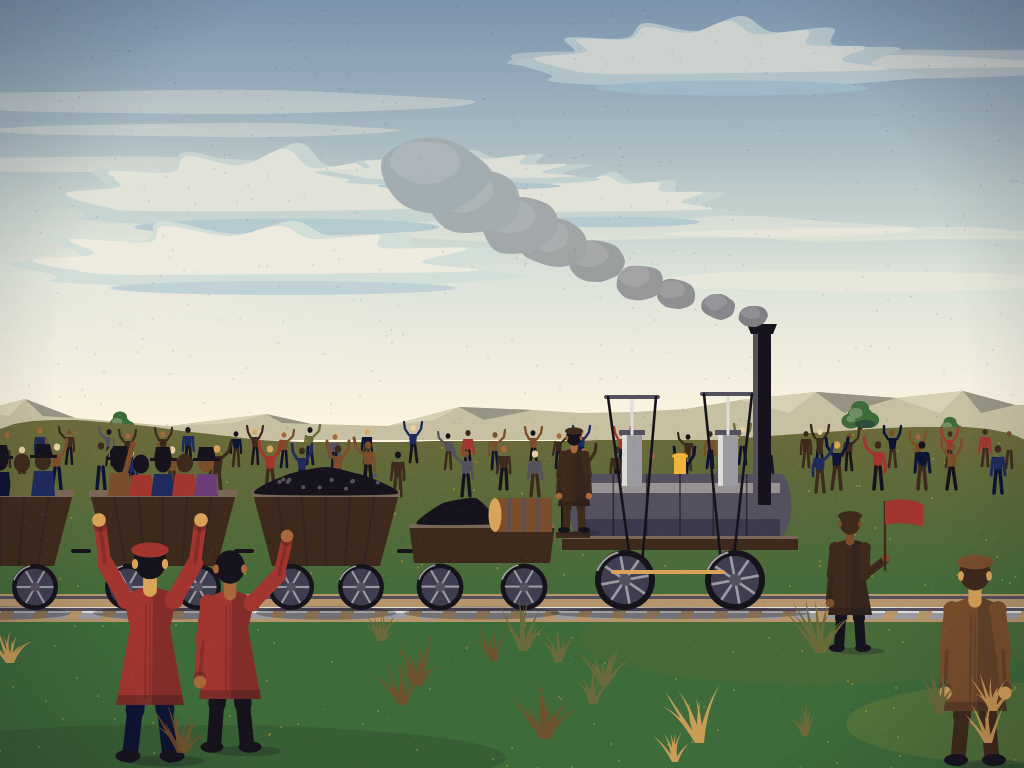
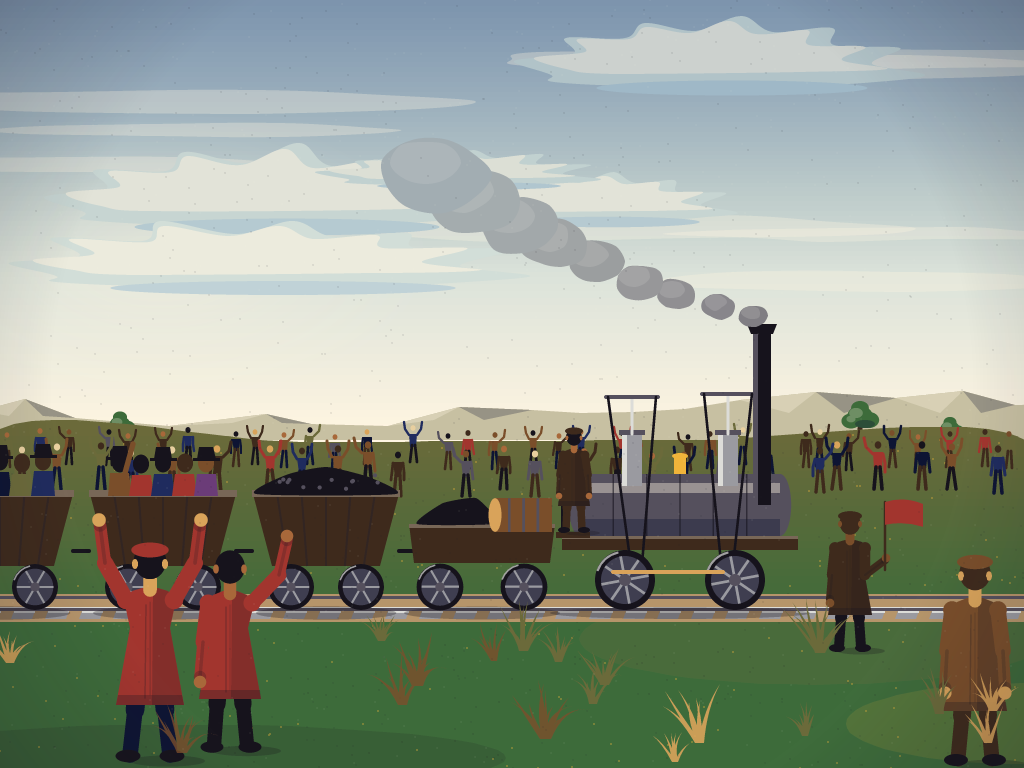
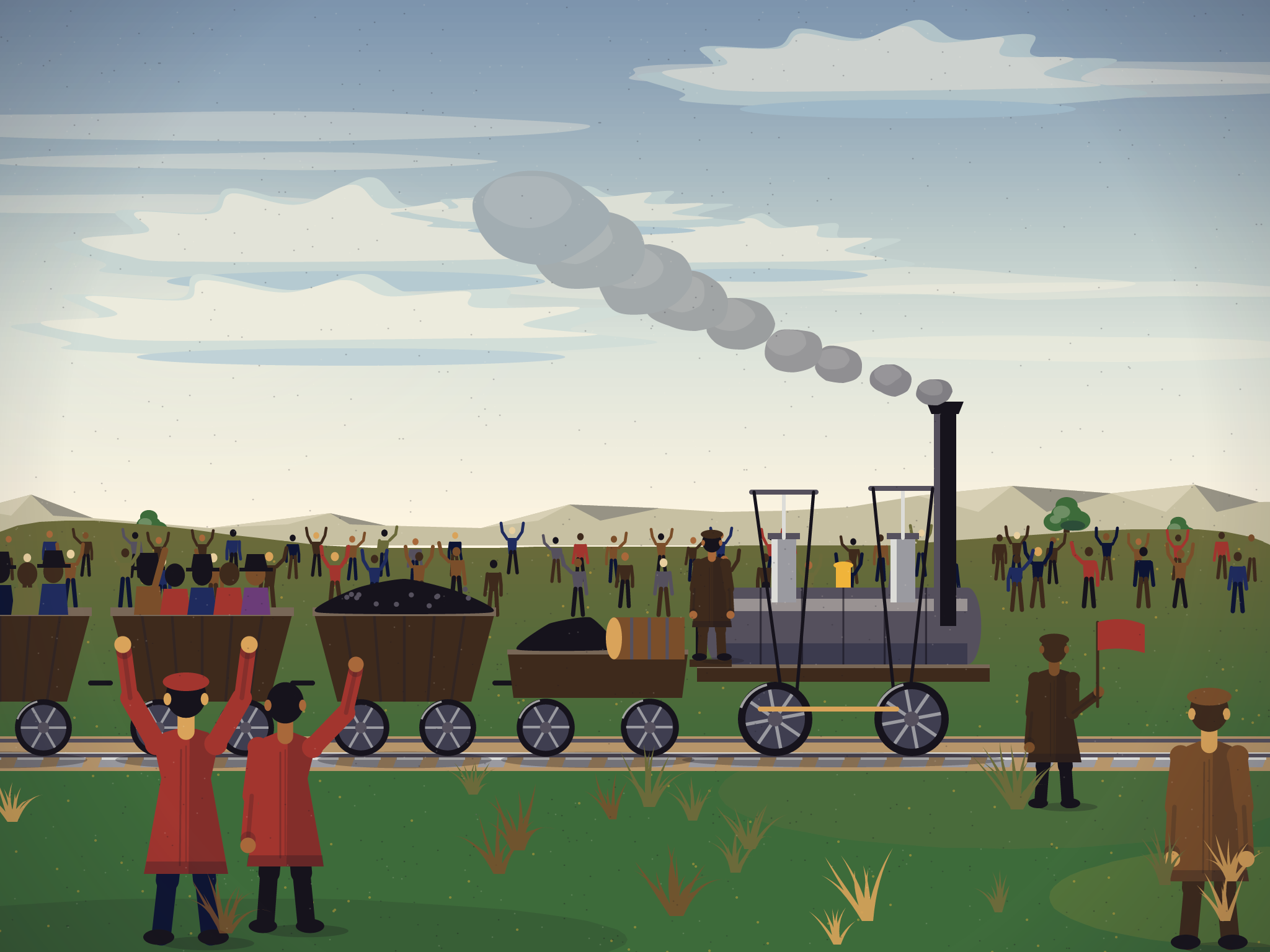
On 27 September 1825, Locomotion No. 1 pulled the first train on the Stockton and Darlington Railway in County Durham, England, the first public steam railway.
The Stockton and Darlington Railway in north-east England was built to carry coal from collieries near Shildon to Darlington and to the River Tees at Stockton. Backed mainly by the Quaker businessman Edward Pease, with George Stephenson as engineer, it was authorised by Parliament in 1821, and a further act in 1823 allowed the use of steam locomotives.
The line opened on 27 September 1825. Locomotion No. 1, built by Robert Stephenson and Company in Newcastle, hauled a train of coal and flour wagons, wagons fitted with seats, and a passenger coach called Experiment from Shildon to Darlington and on to Stockton. Between 450 and 600 people rode on the train, which was led at first by a man on horseback carrying a flag, and an estimated 10,000 people greeted it at Darlington.
It was the world's first public railway to use steam locomotives, although its regular passenger coaches were horse-drawn until 1833. Its success proved that steam railways could work as public transport, and the track gauge Stephenson used, 4 feet 8½ inches, became the standard gauge used by most of the world's railways.
Key facts
- Event
- Opening of the Stockton and Darlington Railway
- Date
- Location
- Shildon to Stockton-on-Tees, County Durham, England
- Mood
- Exciting, smoky, momentous
- Palette
#436b3a#adb9bc#4b4433#eeecde#dbe0d7#7b8379
- Tags
- Size
- 1024 × 768 vector (4:3). PNG at 512, 1024, or 2048 pixels wide.
- License
- CC0 1.0. No attribution, commercial use allowed.