Great Wall of China
1570 · Epic, toiling, timeless

What happened
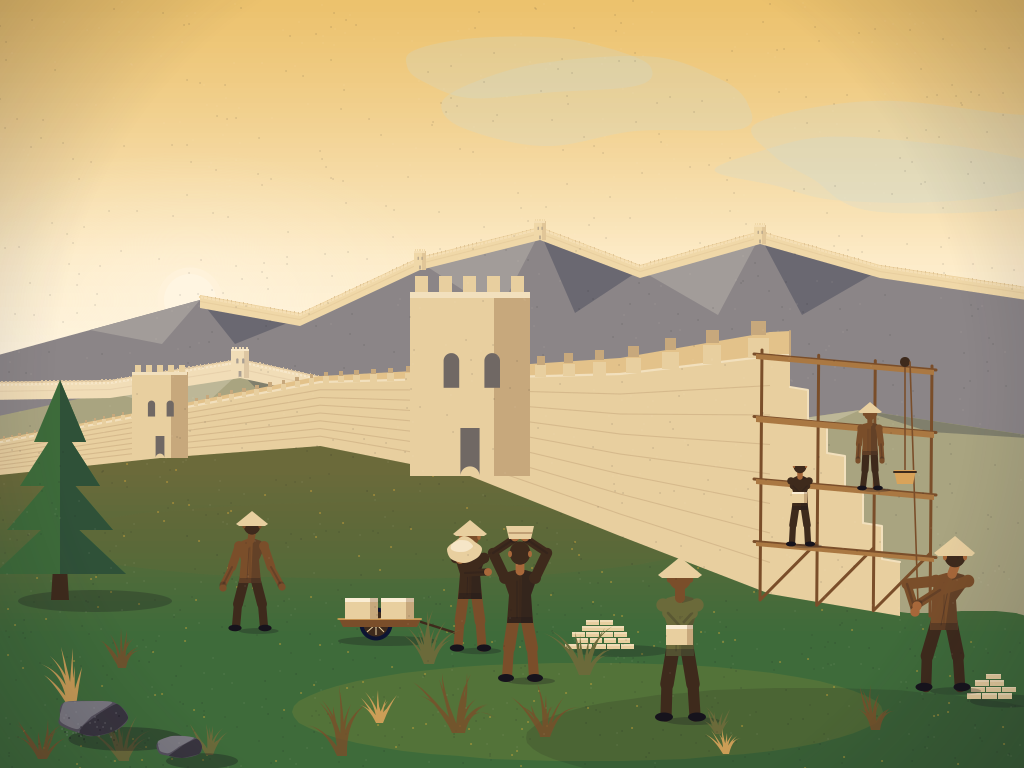
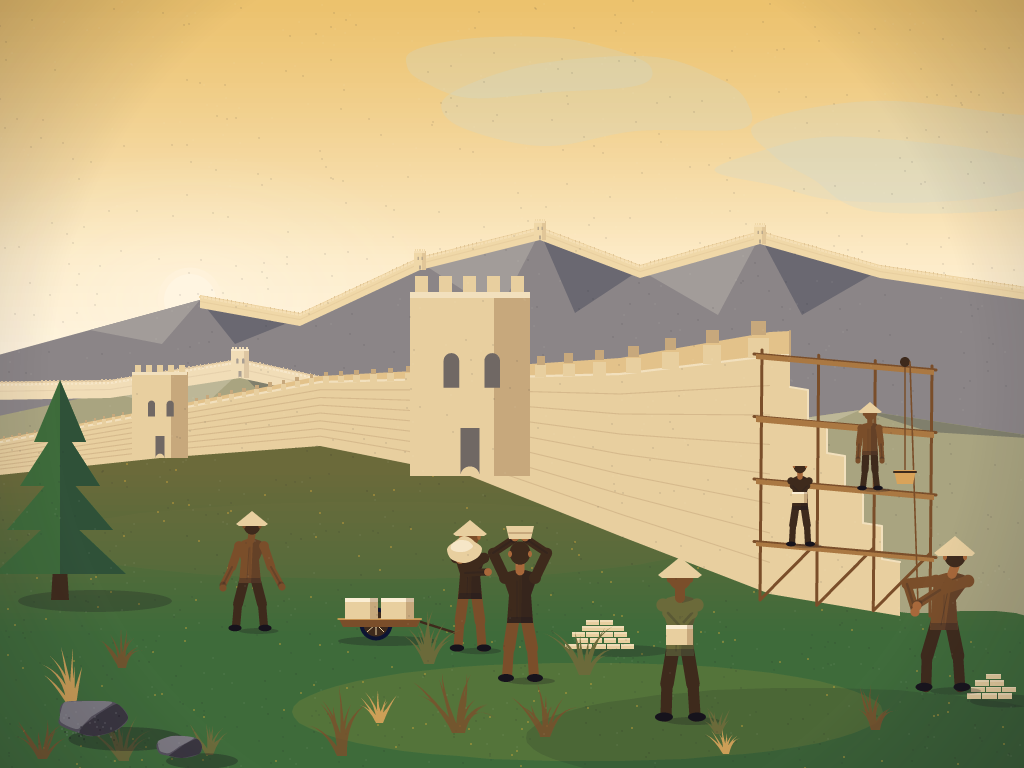
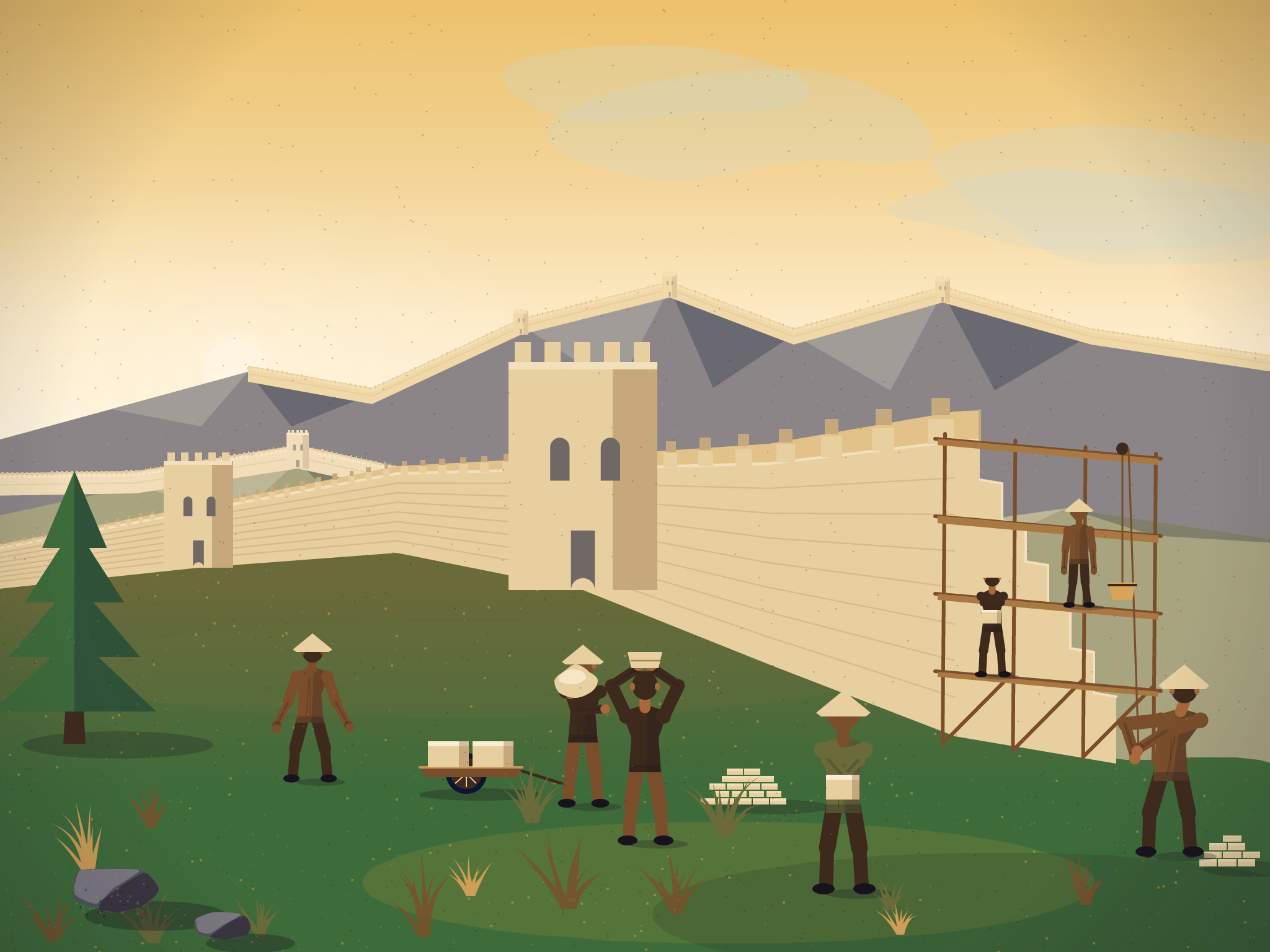
Around 1570, under the Ming dynasty, workers rebuilt China's Great Wall in brick and stone, adding watchtowers along the mountain frontier north of Beijing.
The Great Wall of China is not one wall but a series of fortifications built and rebuilt by Chinese states and dynasties over about 2,000 years to defend against peoples of the northern steppe. Earlier walls, including those joined together under the Qin dynasty after 221 BC, were mostly rammed earth. The brick-and-stone wall with crenellations and watchtowers that most people picture today dates from the Ming dynasty (1368–1644).
The Ming rebuilt and strengthened the wall after repeated Mongol raids, including Altan Khan's attack on the Beijing area in 1550. From 1569, the general Qi Jiguang, commanding the Jizhou frontier, directed the building of more than 1,000 hollow brick watchtowers between Shanhai Pass and the mountains north-west of Beijing, along with repairs to the wall itself. The towers sheltered garrisons and stored weapons and supplies. Soldiers and conscripted labourers did the work with fired bricks, cut stone and lime mortar.
A survey published in 2009 measured the Ming wall at about 8,850 kilometres, including trenches and natural barriers. Well-known Ming sections near Beijing, such as Badaling and Mutianyu, are part of the Great Wall UNESCO World Heritage Site, inscribed in 1987.
Key facts
- Event
- Ming dynasty rebuilding of the Great Wall
- Date
- Location
- Great Wall of China, north of Beijing, China
- Mood
- Epic, toiling, timeless
- Palette
#ead19f#506e3d#e4c587#9d917e#f6e2b9#4b5c37
- Tags
- Size
- 1024 × 768 vector (4:3). PNG at 512, 1024, or 2048 pixels wide.
- License
- CC0 1.0. No attribution, commercial use allowed.