First Powered Flight
1903 · Calm, fragile, pioneering

What happened
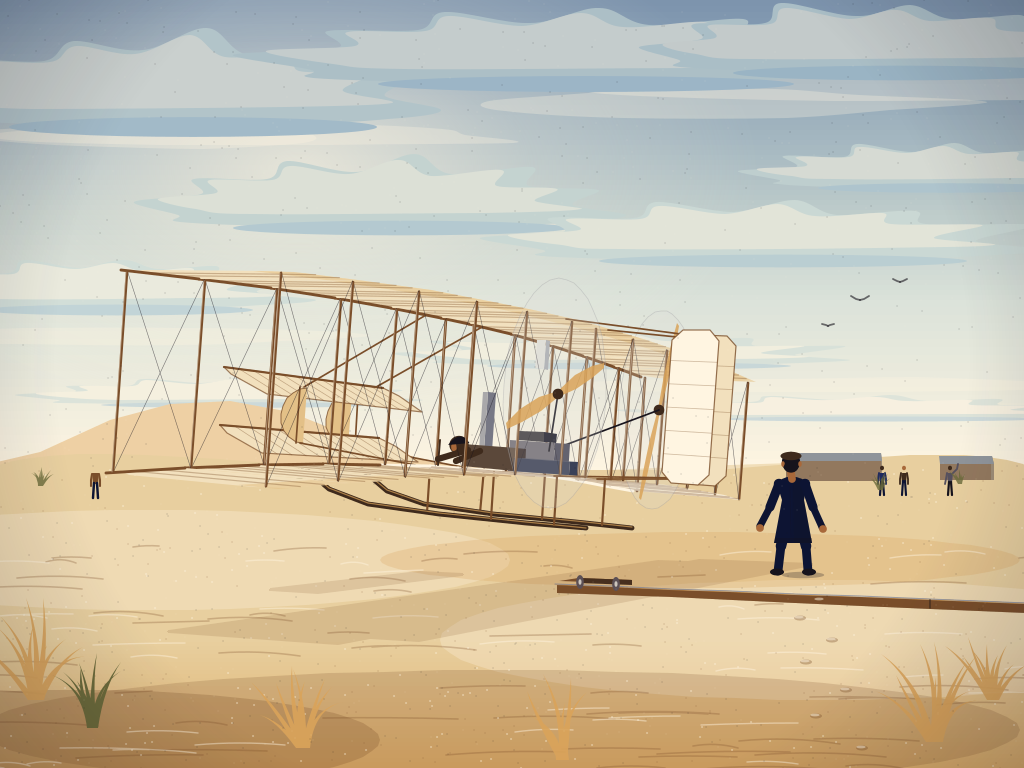
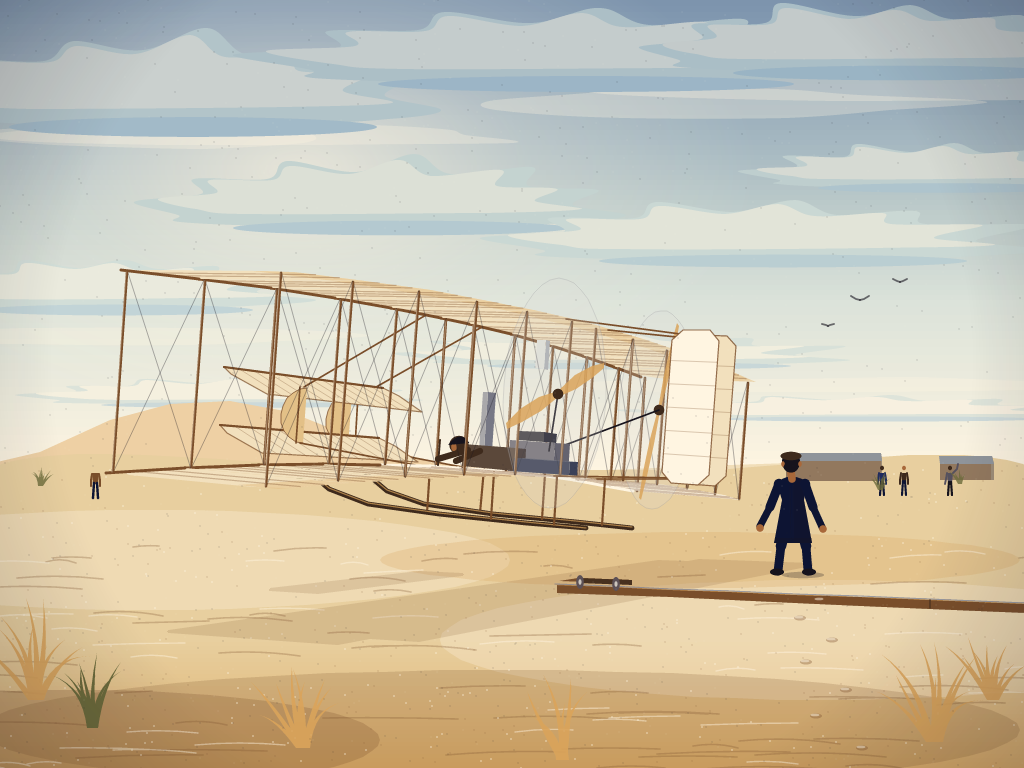
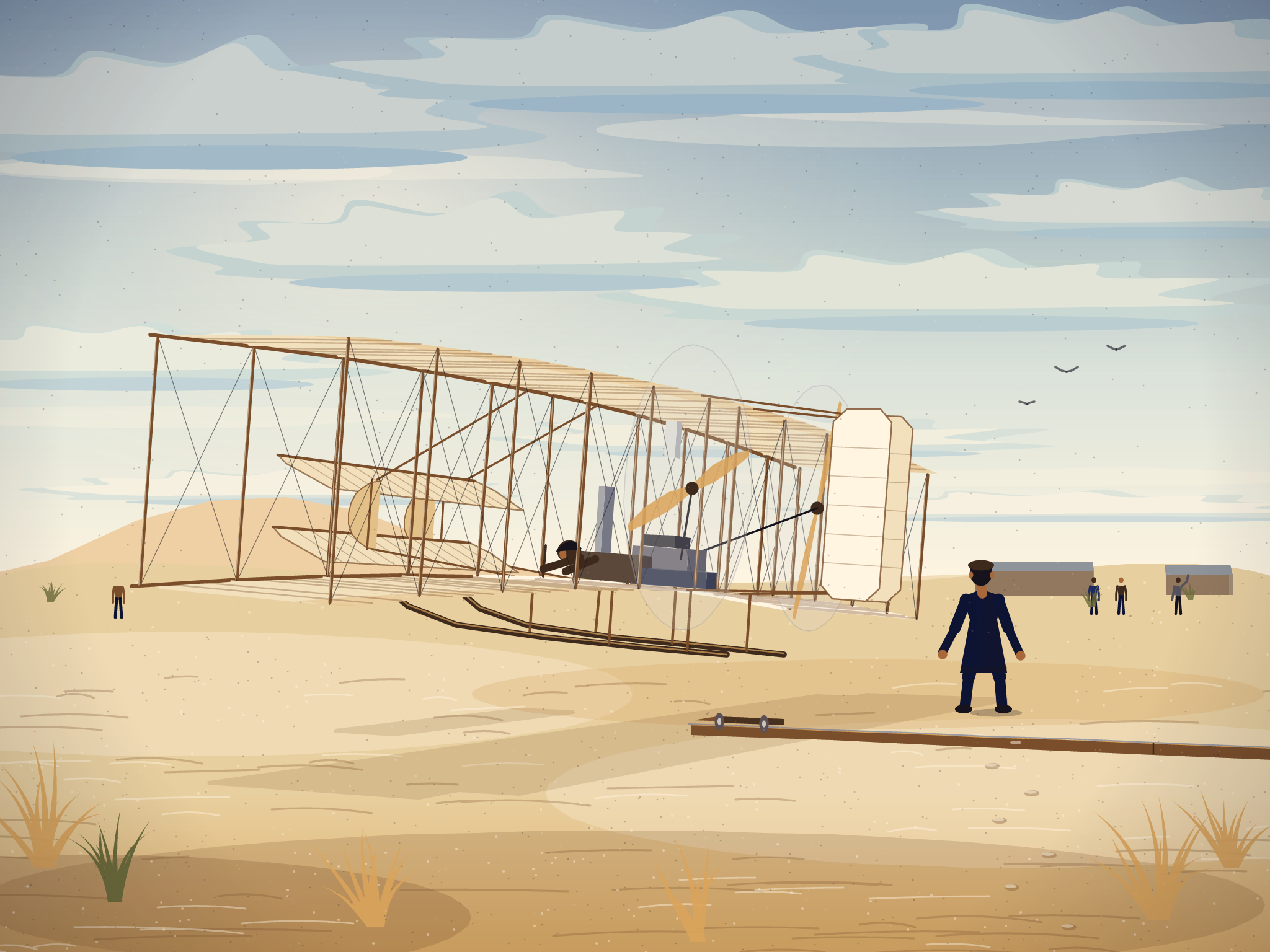
On 17 December 1903, Orville and Wilbur Wright made the first controlled, sustained powered flights at Kill Devil Hills near Kitty Hawk, North Carolina.
Orville and Wilbur Wright were bicycle makers from Dayton, Ohio, who spent several years testing kites and gliders before building their first powered aircraft, the Wright Flyer. They chose the sand dunes at Kill Devil Hills, near the village of Kitty Hawk on North Carolina's Outer Banks, for their steady winds, open space and soft ground.
On the morning of 17 December 1903, Orville piloted the first flight, which lasted 12 seconds and covered 120 feet (about 37 metres). The brothers made four flights that day, taking turns at the controls; the longest, flown by Wilbur, lasted 59 seconds and covered 852 feet (about 260 metres). Five local men witnessed the flights, and one of them, John T. Daniels, took the well-known photograph of the first takeoff.
The Wright Flyer was the first heavier-than-air machine to make a controlled, sustained flight under its own power with a pilot aboard. The brothers' method of controlling an aircraft in pitch, roll and yaw remains the basis of aircraft control today. The original 1903 Flyer is displayed at the Smithsonian's National Air and Space Museum in Washington, D.C.
Key facts
- Event
- Wright brothers' first powered flight
- Date
- Location
- Kill Devil Hills, near Kitty Hawk, North Carolina, United States
- Mood
- Calm, fragile, pioneering
- Palette
#b3c1c5#dbc298#aa9679#e9e9db#e0ddcb#dbd2b9
- Tags
- Size
- 1024 × 768 vector (4:3). PNG at 512, 1024, or 2048 pixels wide.
- License
- CC0 1.0. No attribution, commercial use allowed.