Building the Great Pyramid
c. 2560 BC · Warm, monumental, industrious

What happened
Around 2560 BC, workers built the Great Pyramid of Giza as the tomb of Pharaoh Khufu, on the Giza plateau by the Nile near present-day Cairo, Egypt.
The Great Pyramid of Giza was built as the tomb of Khufu, a pharaoh of Egypt's Fourth Dynasty in the Old Kingdom. Its construction is usually dated to around 2600–2560 BC and is thought to have taken about 20 years. It stands on the Giza plateau on the west bank of the Nile, on the edge of modern Cairo.
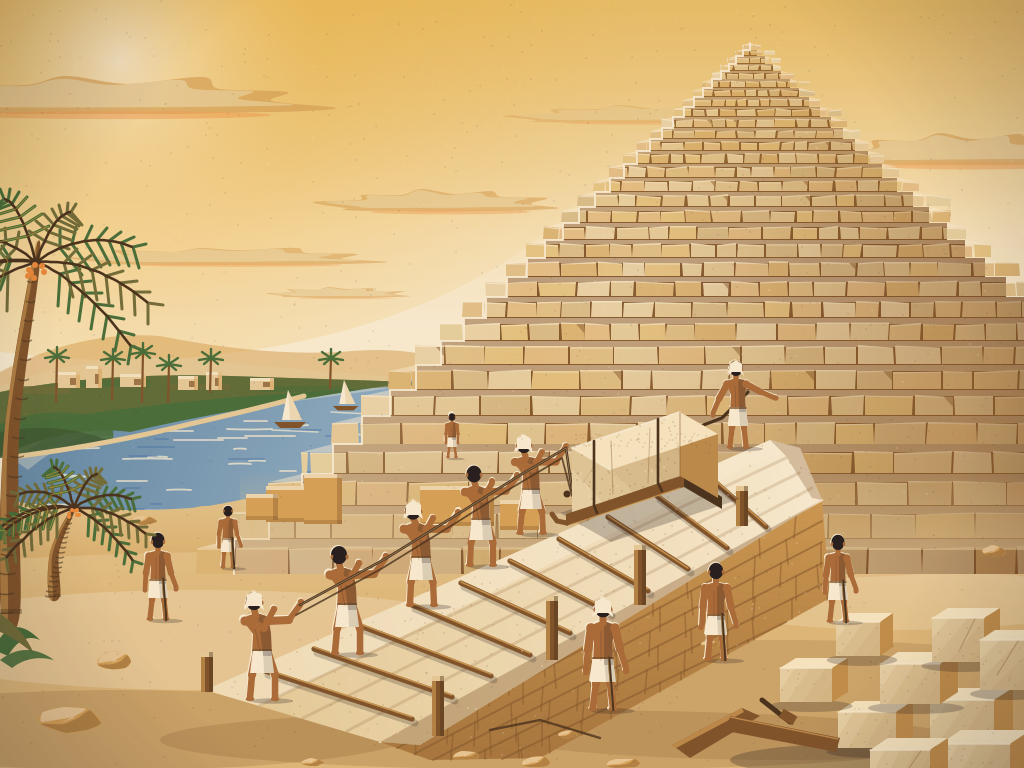
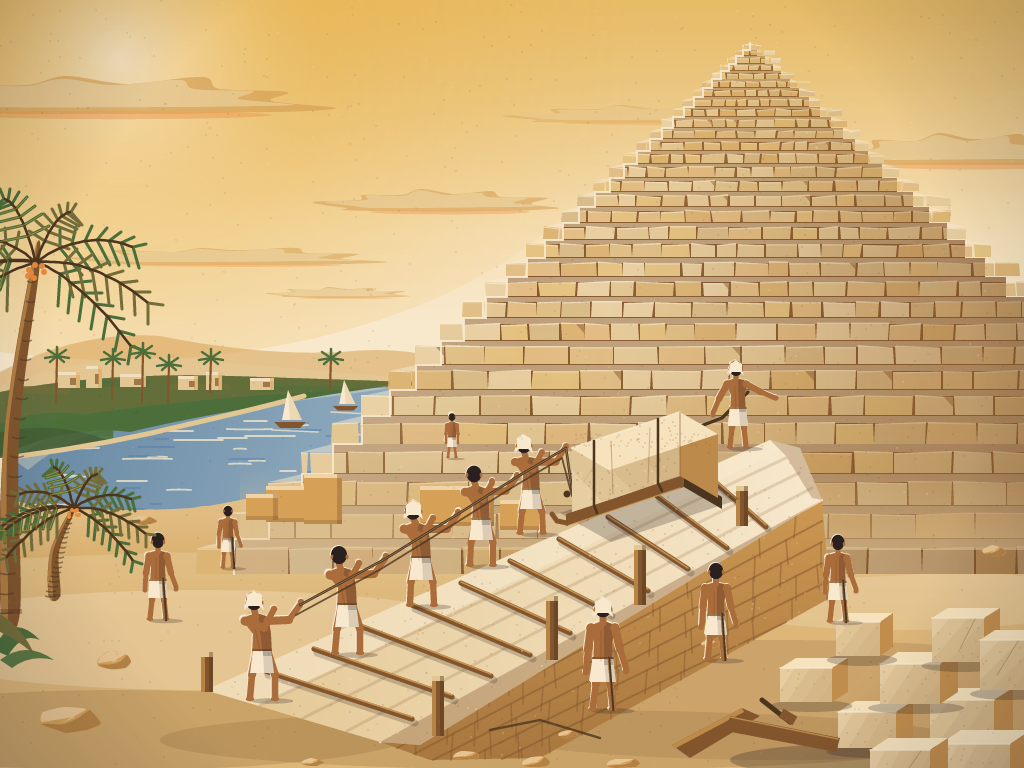
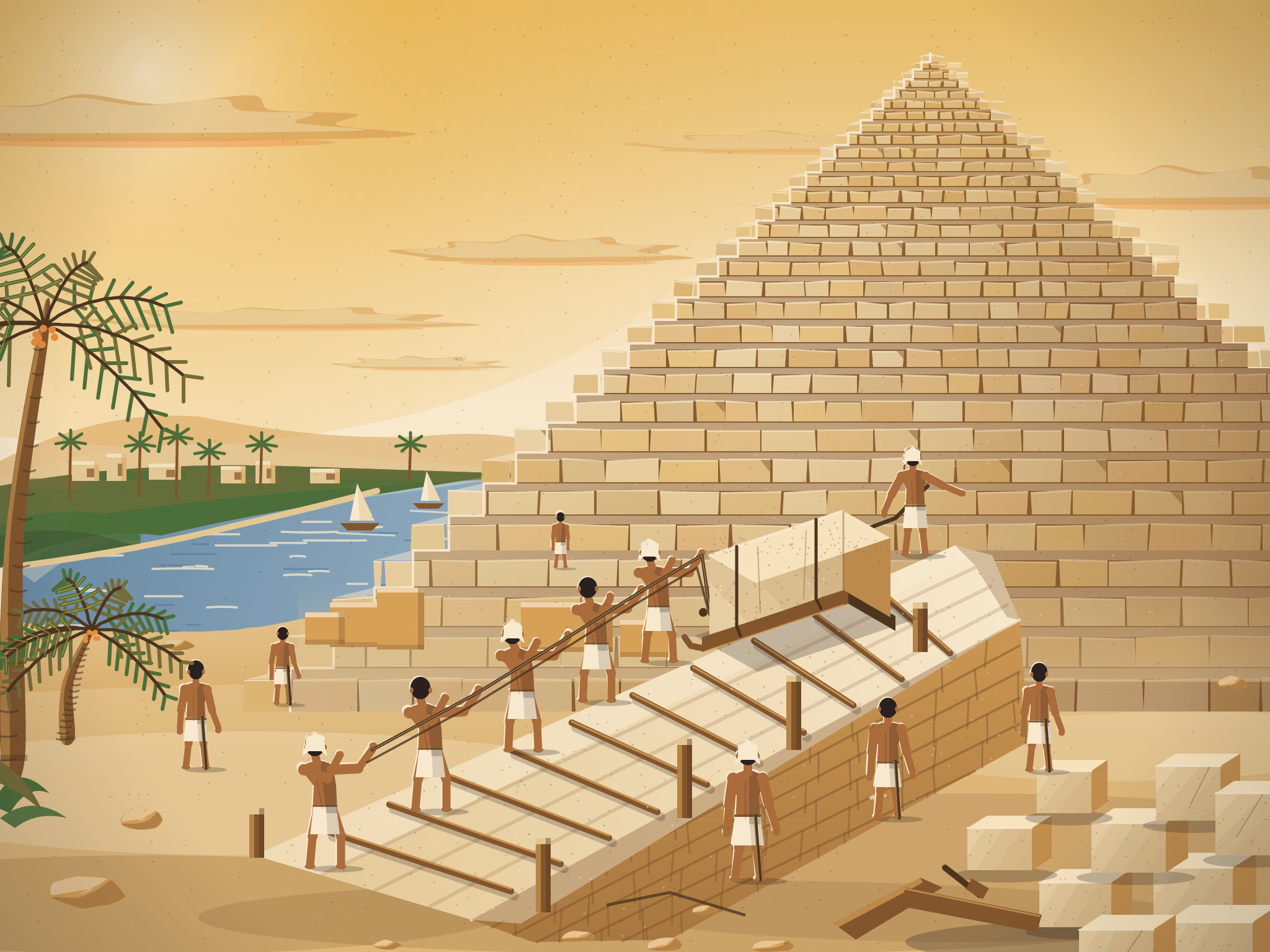
The pyramid is made of an estimated 2.3 million blocks, mostly local limestone, with an outer casing of fine white limestone from Tura and granite from Aswan for the inner chambers. It originally rose about 146 metres and remained the tallest human-made structure in the world for more than 3,800 years. Excavations of the nearby workers' town and cemeteries indicate that it was built by organised crews of workers who were housed and fed by the state, not by enslaved people. Exactly how the blocks were raised is still debated, but ramps, sledges and levers are the most widely accepted explanations.
It is the oldest of the Seven Wonders of the Ancient World and the only one still largely standing.
Key facts
- Event
- Construction of the Great Pyramid of Giza
- Date
- c. 2560 BC
- Location
- Giza, Egypt
- Mood
- Warm, monumental, industrious
- Palette
#e1be80#a08052#eaca90#b9a17a#d1ac74#f1daad
- Tags
- Size
- 1024 × 768 vector (4:3). PNG at 512, 1024, or 2048 pixels wide.
- License
- CC0 1.0. No attribution, commercial use allowed.