Printing Press
1450 · Warm, industrious, quietly revolutionary

What happened
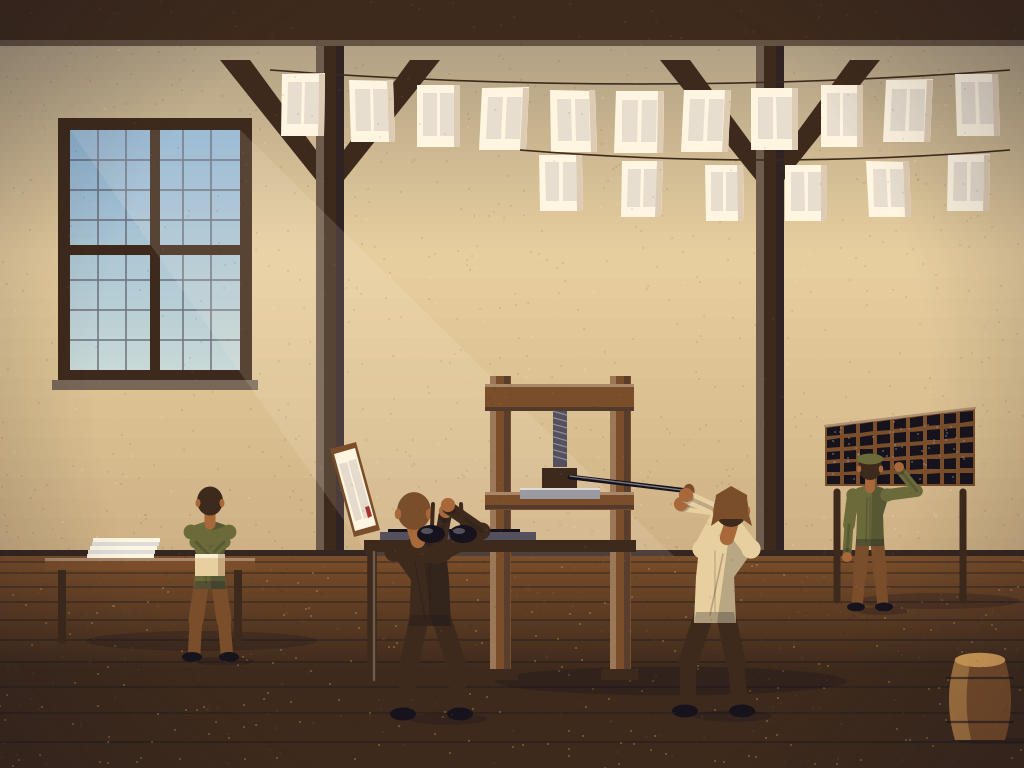
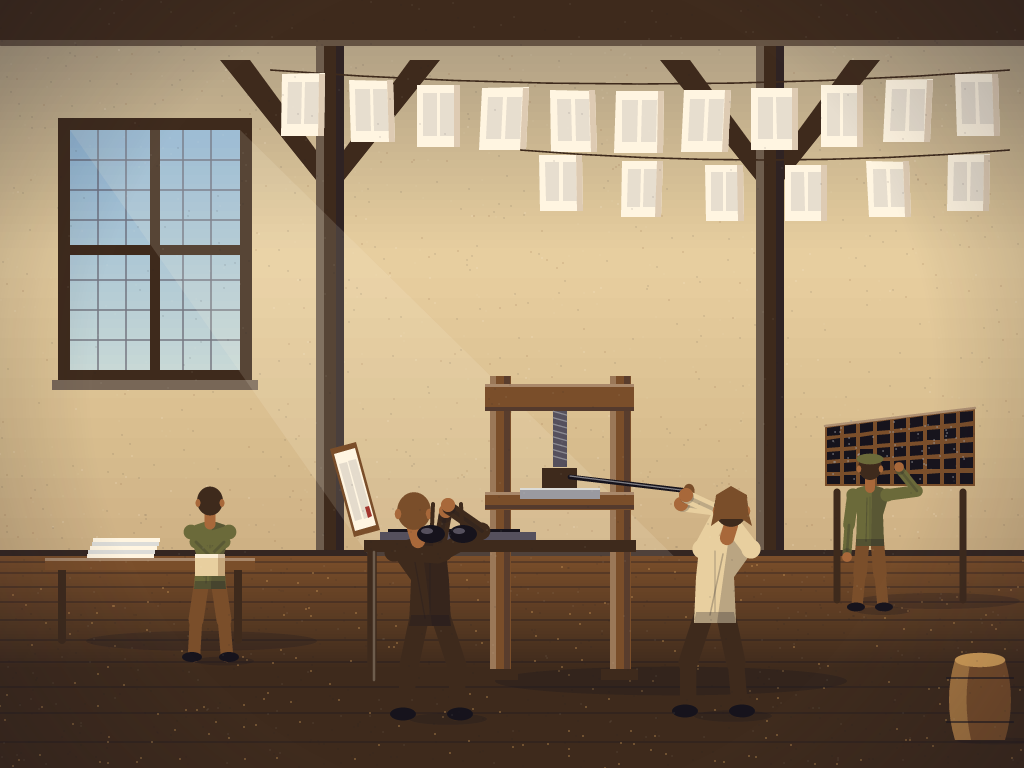
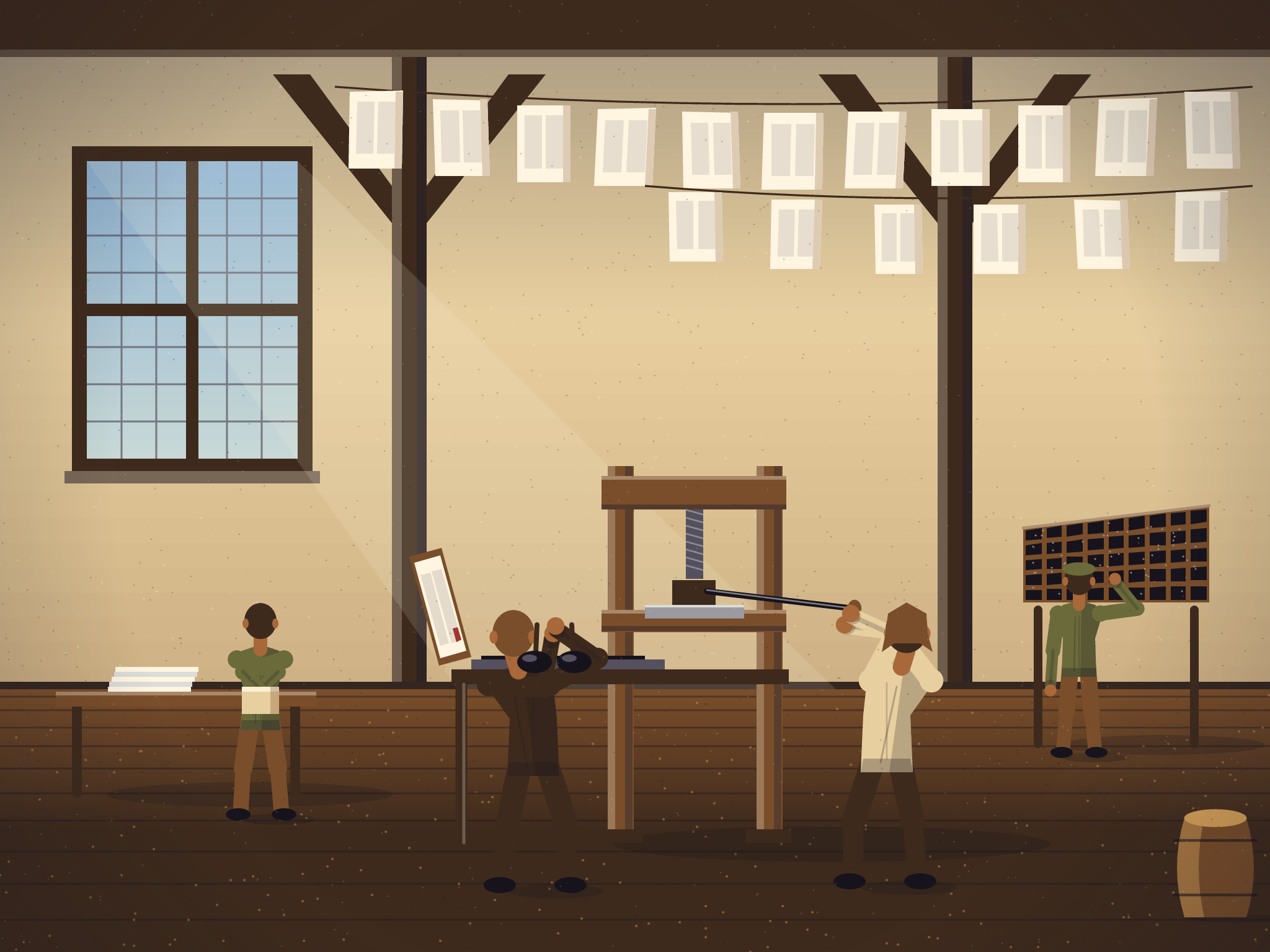
Around 1450 in Mainz, Germany, Johannes Gutenberg developed printing with movable metal type, which led to the Gutenberg Bible and mass-produced books.
Johannes Gutenberg, a goldsmith from Mainz in the Holy Roman Empire (in present-day Germany), developed a system of printing with movable metal type between about 1440 and 1450. It combined a hand mould for casting uniform letters in a lead-based alloy, an oil-based ink, and a wooden screw press adapted from existing presses such as those used for wine. Movable type had been used earlier in China and Korea, but Gutenberg's system was the first suited to fast, large-scale printing with an alphabet.
By about 1450 he was running a print shop in Mainz, funded partly by loans from the merchant Johann Fust. Its best-known work, the Gutenberg Bible, was completed around 1454–1455 in an edition of roughly 180 copies, fewer than 50 of which survive.
Printing spread quickly. By 1500, presses were operating in more than 200 European towns and had produced millions of books. Cheaper and faster book production helped spread the ideas of the Renaissance, the Protestant Reformation and the Scientific Revolution, and it greatly increased literacy across Europe.
Key facts
- Event
- Gutenberg's movable-type printing press
- Date
- Location
- Mainz, Germany
- Mood
- Warm, industrious, quietly revolutionary
- Palette
#3a281d#dbc69e#c8b491#583b26#e5d7b9#877157
- Tags
- Size
- 1024 × 768 vector (4:3). PNG at 512, 1024, or 2048 pixels wide.
- License
- CC0 1.0. No attribution, commercial use allowed.