Titanic Departure
1912 · Hopeful, bright, bittersweet

What happened
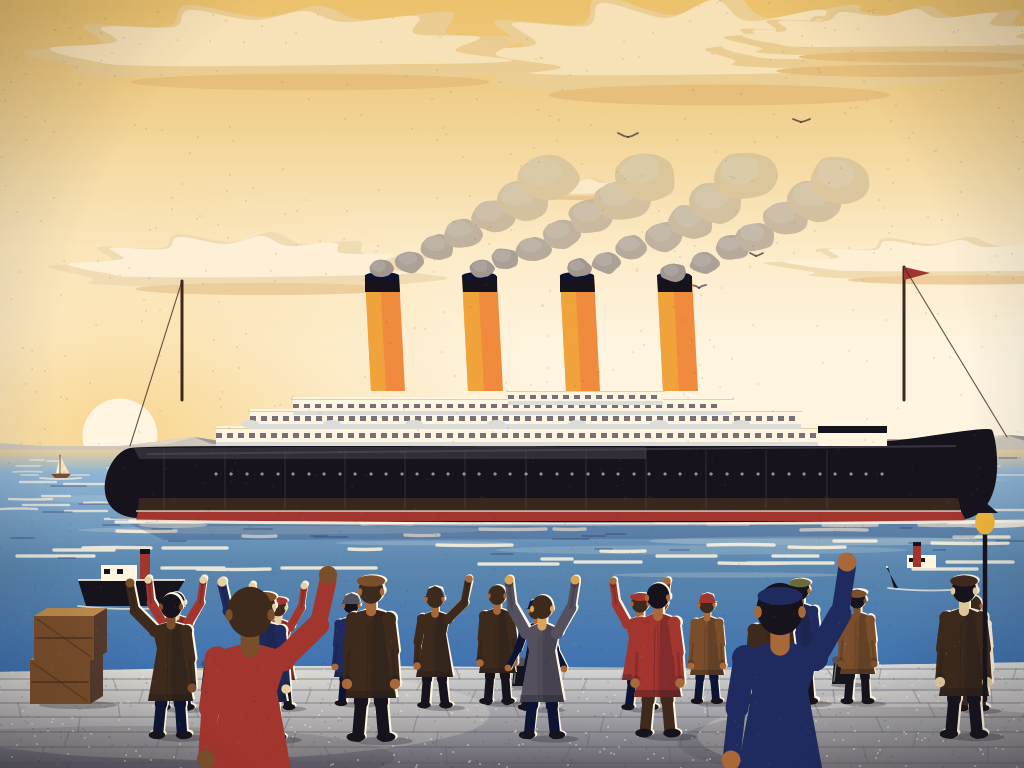
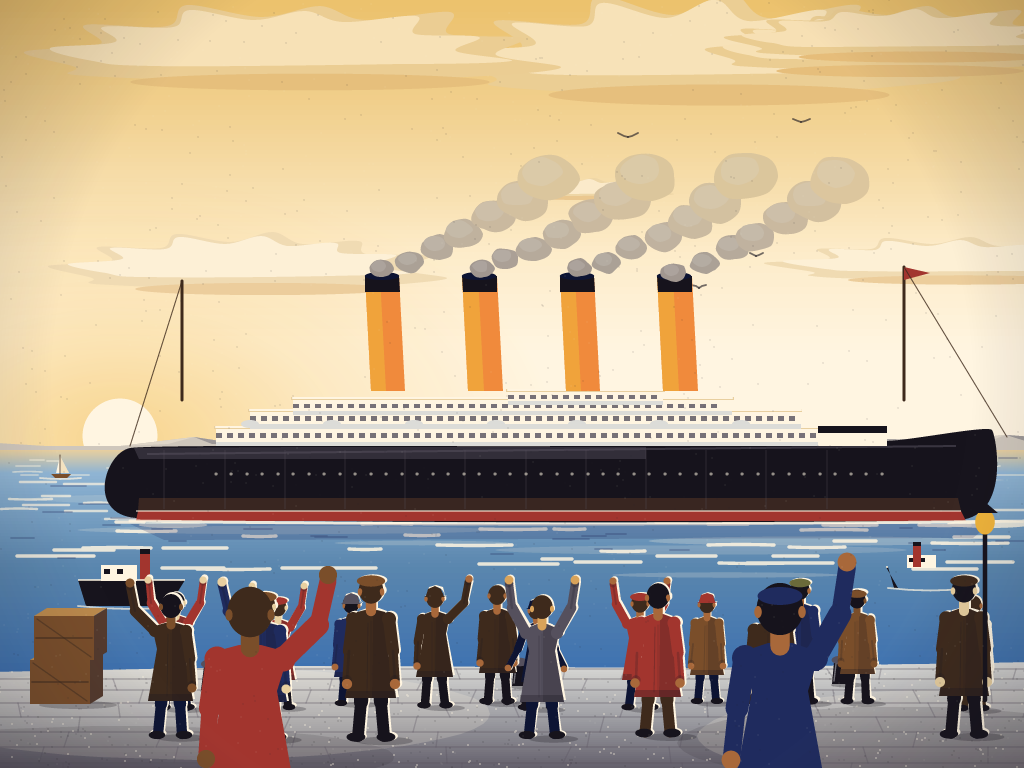
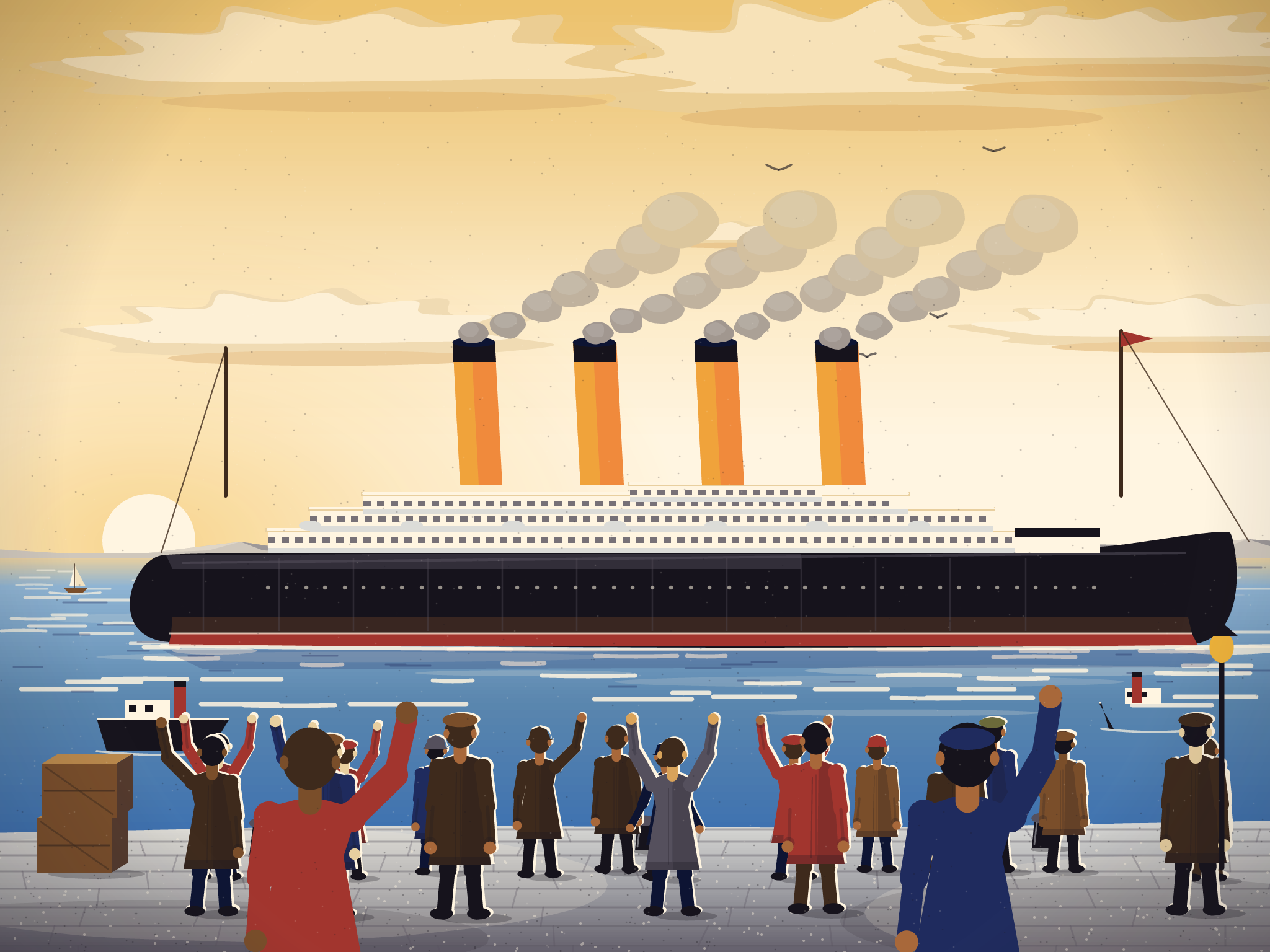
On 10 April 1912, RMS Titanic left Southampton, England, on her maiden voyage to New York; five days later she struck an iceberg and sank in the Atlantic.
RMS Titanic was a British passenger liner operated by the White Star Line and built by Harland and Wolff in Belfast. When she entered service she was the largest ship afloat, about 269 metres (882 feet) long, with four funnels, the fourth of which was mainly used for ventilation.
Titanic left Southampton around noon on 10 April 1912 on her maiden voyage to New York, under Captain Edward Smith. As she moved off, the suction from her hull pulled the moored liner SS New York from its moorings, and the two ships only narrowly avoided a collision. Titanic called at Cherbourg, France, that evening and at Queenstown (now Cobh), Ireland, the next day, then headed into the Atlantic with about 2,200 passengers and crew aboard.
Late on 14 April she struck an iceberg in the North Atlantic, and she sank early on 15 April. About 1,500 people died, partly because the ship carried lifeboats for only around half of those aboard. The disaster led to the first International Convention for the Safety of Life at Sea (SOLAS) in 1914.
Key facts
- Event
- RMS Titanic departs Southampton on her maiden voyage
- Date
- Location
- Southampton, England
- Mood
- Hopeful, bright, bittersweet
- Palette
#ead1a0#4a3a41#708ba8#f8e3ba#fdf1d7#c9ae88
- Tags
- Size
- 1024 × 768 vector (4:3). PNG at 512, 1024, or 2048 pixels wide.
- License
- CC0 1.0. No attribution, commercial use allowed.