Landfall in the New World
1492 · Hopeful, uncertain, luminous

What happened
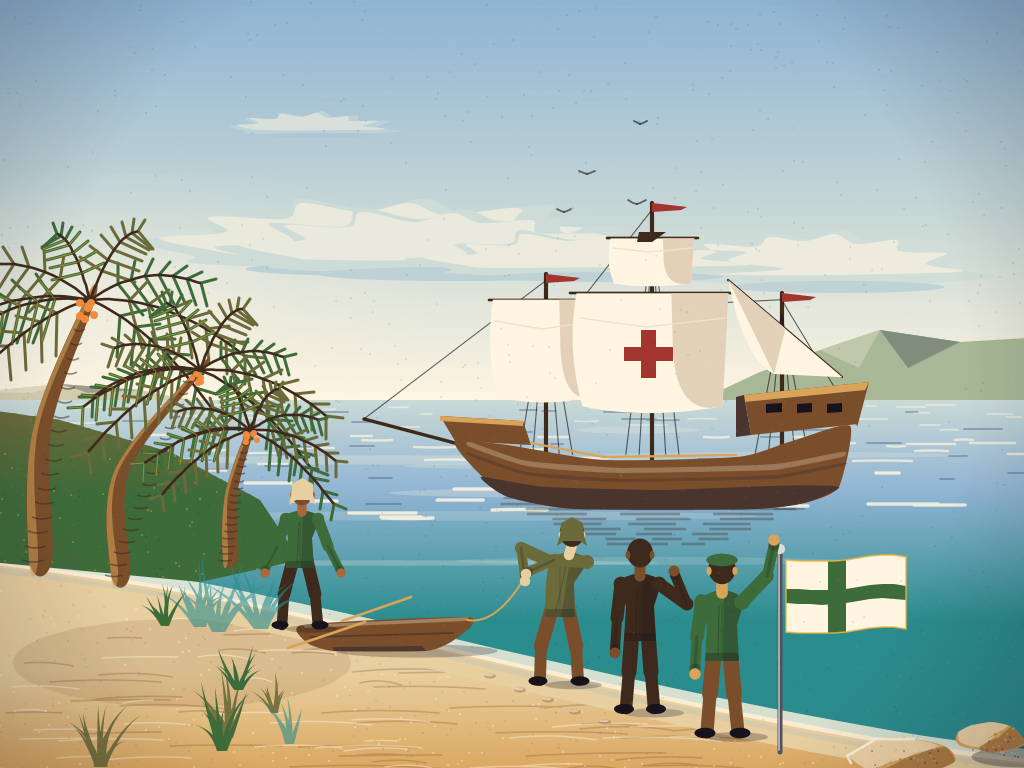
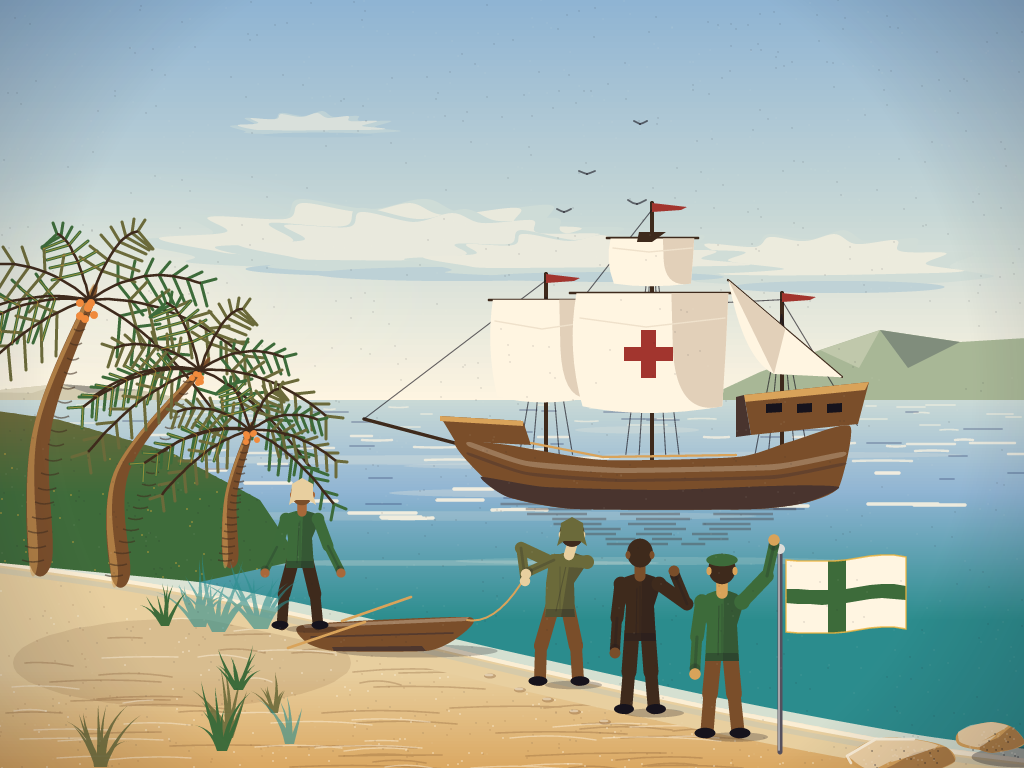
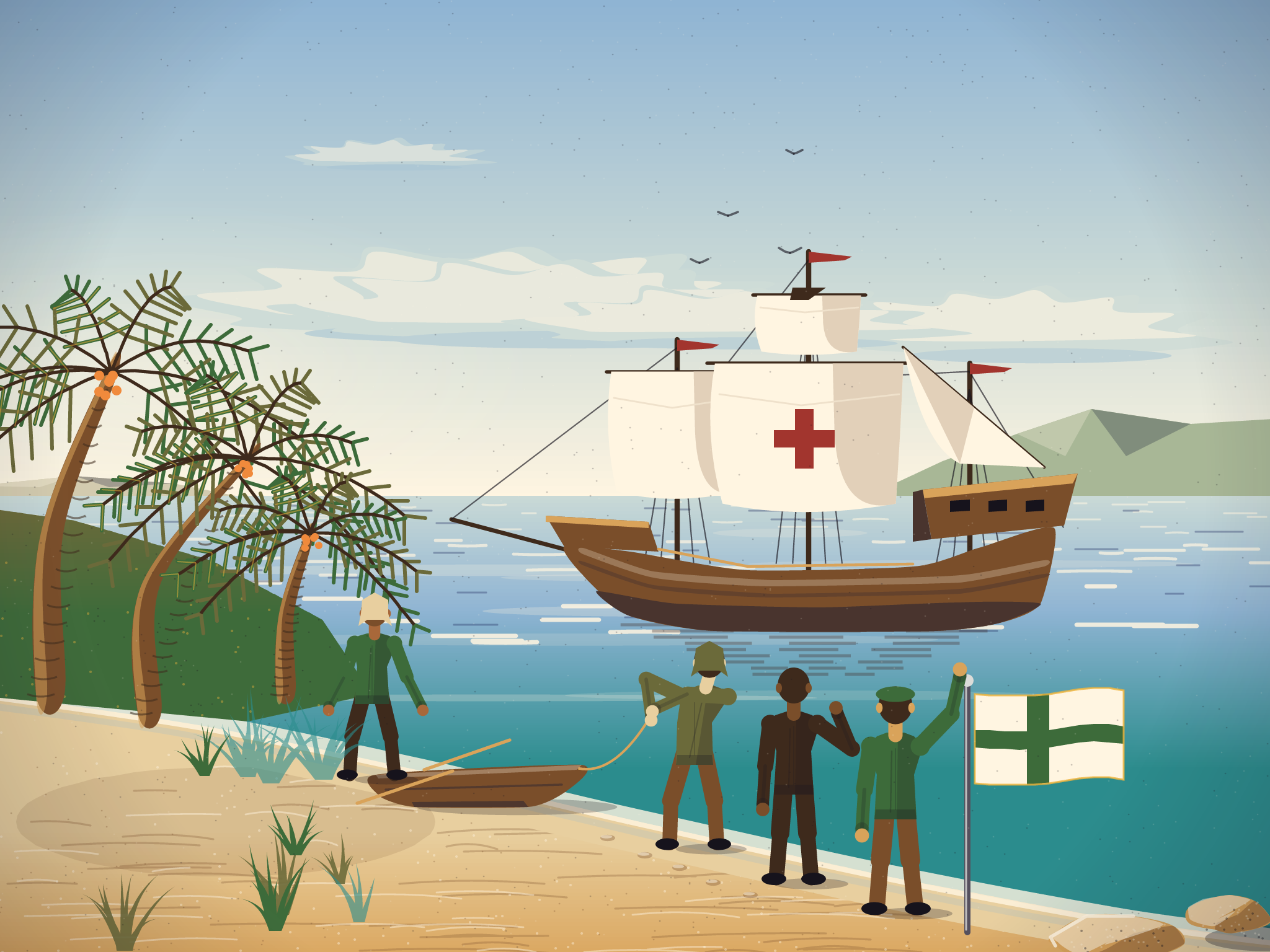
On 12 October 1492, Christopher Columbus's expedition made landfall in the Bahamas, on an island its Lucayan Taíno inhabitants called Guanahani.
Christopher Columbus, a Genoese navigator sailing for the Spanish monarchs Ferdinand and Isabella, left Palos de la Frontera in Spain on 3 August 1492 with three ships: the Santa María, the Pinta and the Niña. He aimed to reach Asia by sailing west across the Atlantic. After a stop in the Canary Islands, the fleet crossed the open ocean for about five weeks.
Early on 12 October 1492, a lookout on the Pinta sighted land. Columbus went ashore on an island in the Bahamas that its Lucayan Taíno inhabitants called Guanahani, claimed it for Castile and named it San Salvador. Which island this was is still debated, but it is usually identified with present-day San Salvador Island. The expedition went on to Cuba and Hispaniola before returning to Spain in 1493.
The voyage began lasting contact between Europe and the Americas and the exchange of crops, animals and diseases between the two hemispheres. For the Taíno and other Indigenous peoples of the Caribbean, it led to conquest, enslavement, forced labour and epidemic disease, and within a few decades their populations had collapsed.
Key facts
- Event
- Columbus's landfall in the Americas
- Date
- Location
- Guanahani (San Salvador), The Bahamas
- Mood
- Hopeful, uncertain, luminous
- Palette
#586f59#b9c5c4#bdb090#81abbe#cbd7d3#efedde
- Tags
- Size
- 1024 × 768 vector (4:3). PNG at 512, 1024, or 2048 pixels wide.
- License
- CC0 1.0. No attribution, commercial use allowed.