Colosseum Games
c. AD 80 · Loud, golden, dramatic

What happened
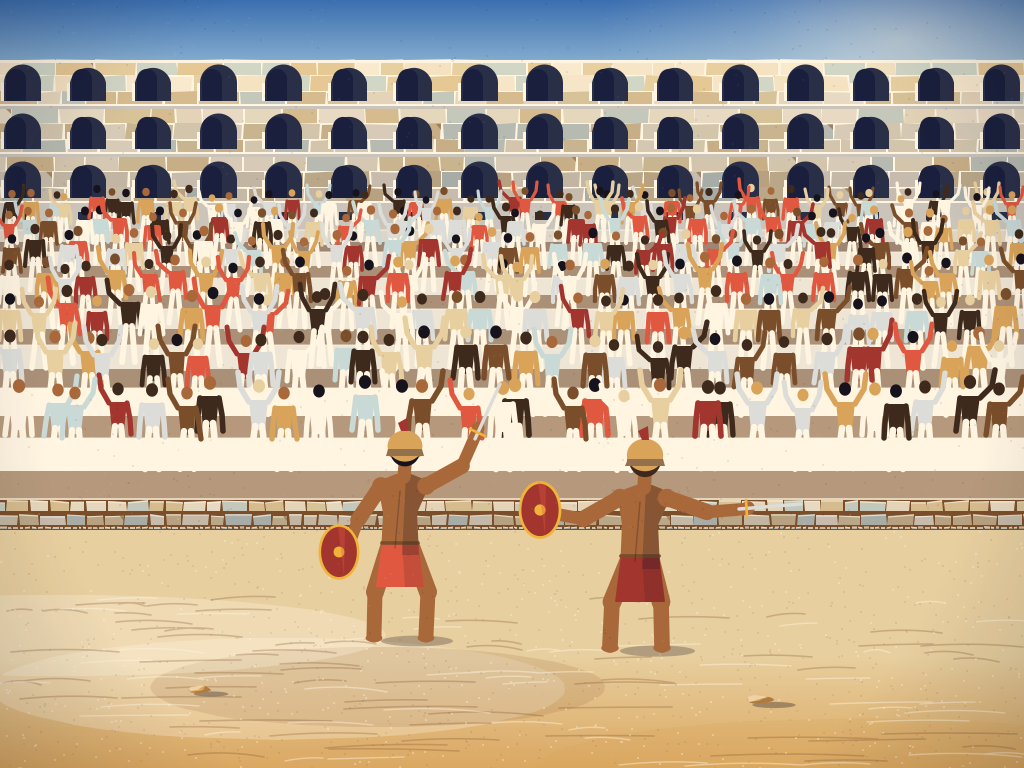
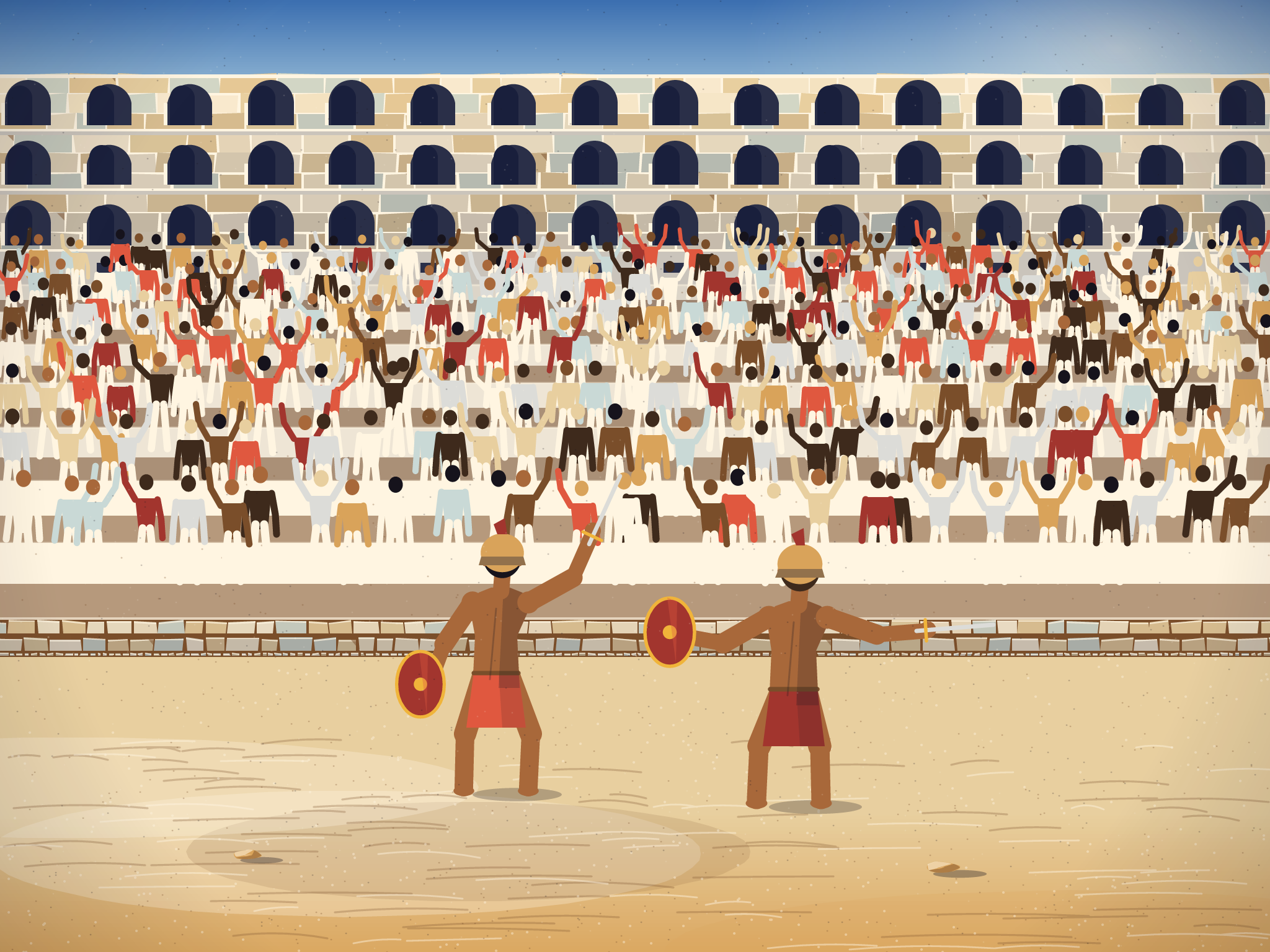
In AD 80, Emperor Titus opened Rome's Flavian Amphitheatre, the Colosseum, with 100 days of games including gladiator fights before tens of thousands.
The Colosseum, originally called the Flavian Amphitheatre, was begun under Emperor Vespasian around AD 70–72 on the site of an artificial lake in the grounds of Nero's Golden House, in the centre of Rome. It was built of travertine, tuff and Roman concrete faced with brick, and it is the largest amphitheatre ever built.
Vespasian's son Titus inaugurated it in AD 80 with games that, according to ancient writers, lasted 100 days and included gladiatorial combat, wild-animal hunts and public executions. Spectators, seated by social rank, are estimated to have numbered between 50,000 and 80,000. Further work, including the underground passages beneath the arena floor, was completed under Titus's brother Domitian.
Gladiator fights continued there into the 5th century and animal hunts into the 6th. Earthquakes and the removal of stone for other buildings later damaged the structure, but it remains one of the best-known monuments of the Roman Empire and is part of the Historic Centre of Rome UNESCO World Heritage Site.
Key facts
- Event
- Inaugural games of the Colosseum
- Date
- Location
- Rome, Italy
- Mood
- Loud, golden, dramatic
- Palette
#bda688#6e5858#e7cc9c#e4d7bd#f8eedb#d5c3a5
- Tags
- Size
- 1024 × 768 vector (4:3). PNG at 512, 1024, or 2048 pixels wide.
- License
- CC0 1.0. No attribution, commercial use allowed.