Fall of the Berlin Wall
1989 · Joyful, hopeful, defiant

What happened
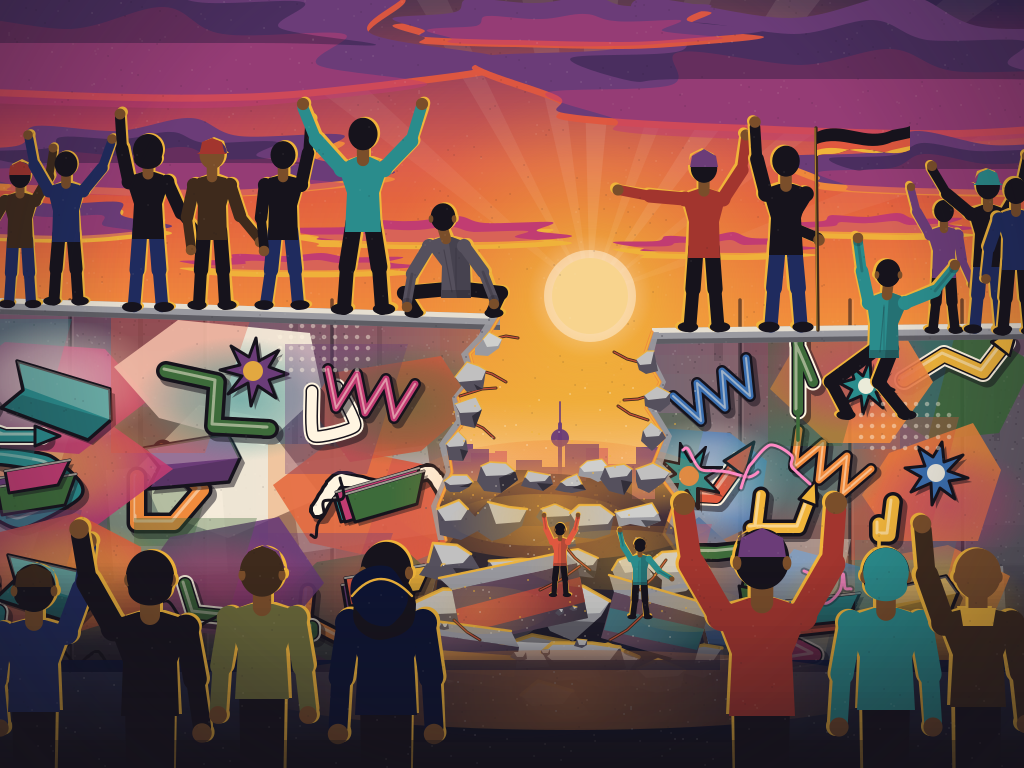
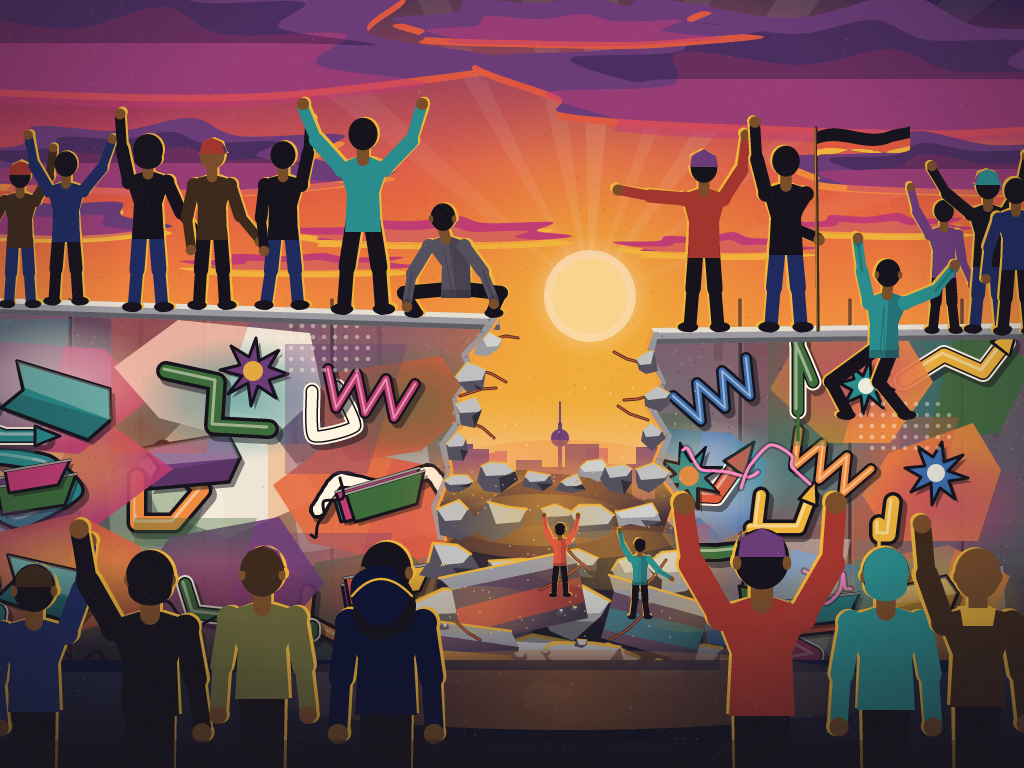
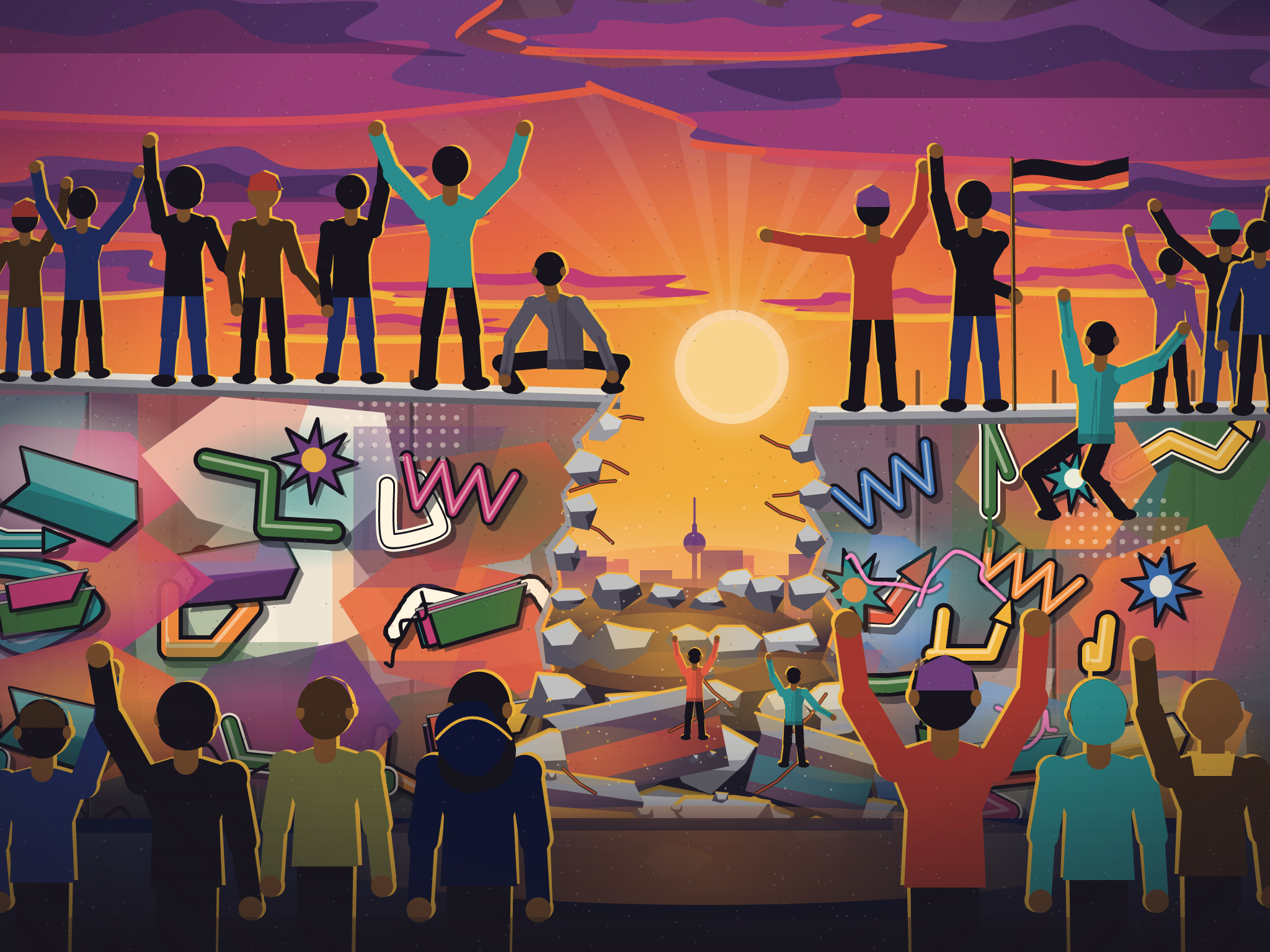
On 9 November 1989, East Germany opened the Berlin Wall's border crossings, and crowds climbed and broke the wall that had divided Berlin since 1961.
The Berlin Wall was built by the German Democratic Republic (East Germany) from 13 August 1961 to stop its citizens from escaping to West Berlin. It grew into a heavily guarded system of concrete walls, fences and a "death strip" around West Berlin, and at least 140 people were killed at the wall during the 28 years it stood.
In 1989, mass protests in East Germany and the opening of Hungary's border with Austria put the government under growing pressure. On the evening of 9 November, party spokesman Günter Schabowski told a press conference that new rules allowing East Germans to travel abroad took effect immediately. Thousands of East Berliners went to the checkpoints, and late that night border guards at Bornholmer Straße opened the gates, followed by other crossings. People from both sides climbed onto the wall near the Brandenburg Gate and began chipping pieces from it.
The fall of the wall became a symbol of the end of the Cold War in Europe. Official demolition began in June 1990, and Germany was reunified on 3 October 1990.
Key facts
- Event
- Fall of the Berlin Wall
- Date
- Location
- Berlin, Germany
- Mood
- Joyful, hopeful, defiant
- Palette
#5c3754#241f2b#ad7d5a#923b5e#d2ad78#8b5c50
- Tags
- Size
- 1024 × 768 vector (4:3). PNG at 512, 1024, or 2048 pixels wide.
- License
- CC0 1.0. No attribution, commercial use allowed.